Equipment
Setting up a Langstroth hive
Before a package or nuc arrives, the hive itself has to be ready. In Canada that means a movable-frame Langstroth hive, sited for sun and drainage, with the boxes stacked in the right order.
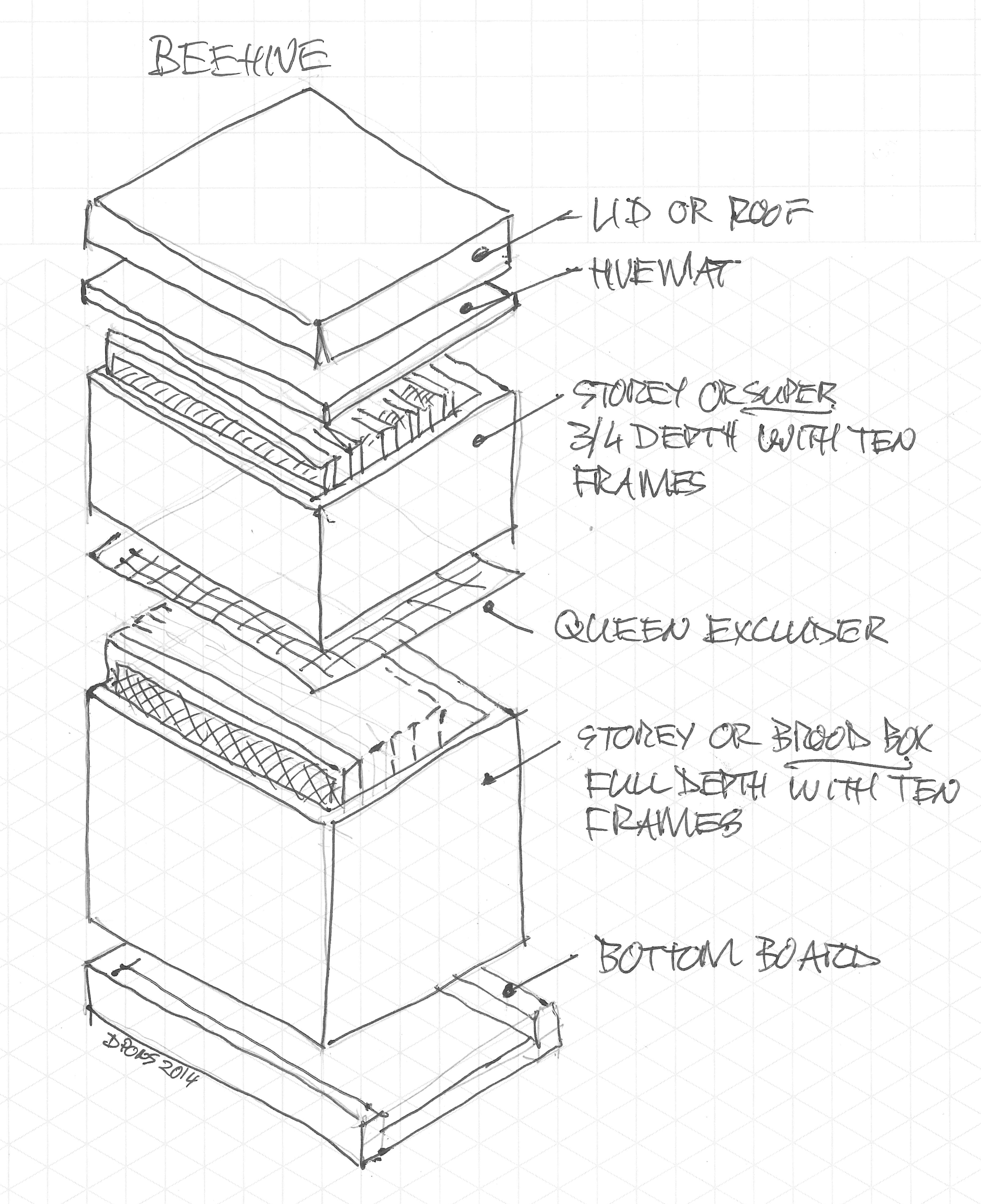
Choosing the site
A hive does best with morning sun, shelter from prevailing wind, and ground that does not pool water. In much of Canada an east- or south-facing position helps the cluster warm earlier on cold mornings. Leave room to stand behind or beside the hive so you are not working directly in the bees' flight path.
- Keep the entrance clear of tall grass and snow-drift lines.
- Raise the hive off the ground on a stand or pallet to slow moisture and keep skunks from reaching the entrance easily.
- Check municipal bylaws and any setback distances before placing hives in an urban yard.
The parts of the hive, bottom to top
A Langstroth hive is a vertical stack. Each part has a single job, and the order matters.
Frames and foundation
Each box holds removable frames. The frames give the bees a guided space to draw comb and let you lift out and inspect brood or honey without cutting anything. New beekeepers often start with foundation in every frame so comb is built straight and is easy to handle.
Why "movable frame" is not optional
Most provinces require hives to have movable frames precisely so an inspector or the beekeeper can examine the brood nest for disease. Fixed-comb boxes cannot be inspected this way and are generally not permitted.
A simple first-season checklist
- Hive stand level and off the ground
- Bottom board and entrance reducer in place
- One or two brood boxes with framed foundation
- Inner and outer covers fitted
- Smoker, hive tool, veil and gloves ready
- Hives registered with the provincial apiarist
- A nearby water source within a short flight
Installing the bees
Whether you start from a package or a nuc, the goal on installation day is calm, brief handling. A nuc transfers established frames of brood and a laying queen straight into your brood box. A package needs the queen released gradually, usually over several days, so the colony accepts her. After installation, leave the colony to settle and feed sugar syrup if natural forage is still scarce.
References: Langstroth hive (Wikipedia), Province of British Columbia — Bees.