Registration first
Every province requires beekeepers to register their hives with the provincial apiarist. Registration supports disease tracking and is the route through which inspection and movement rules are communicated.
Beekeeping Basics · Canada
A reference for new and second-season beekeepers in Canada, covering how a Langstroth hive is assembled, what each season asks of the colony, and how provincial associations and the registration system fit together.

Orientation
Most colonies kept in Canada are western honey bees housed in stacked Langstroth boxes. The work follows the climate: a long winter confinement, a short intense build-up in spring, and a honey flow that varies by region and by what is blooming nearby.
Every province requires beekeepers to register their hives with the provincial apiarist. Registration supports disease tracking and is the route through which inspection and movement rules are communicated.
The standard equipment is the Langstroth hive: removable frames separated by bee space, allowing inspection without destroying comb. This is also a legal expectation in much of the country.
In most of Canada the colony is clustered and broodless for months. Adequate stores, a healthy mite-controlled population, and dry ventilation matter more than any single summer task.
Articles
Each article is self-contained and links to the others where topics overlap.
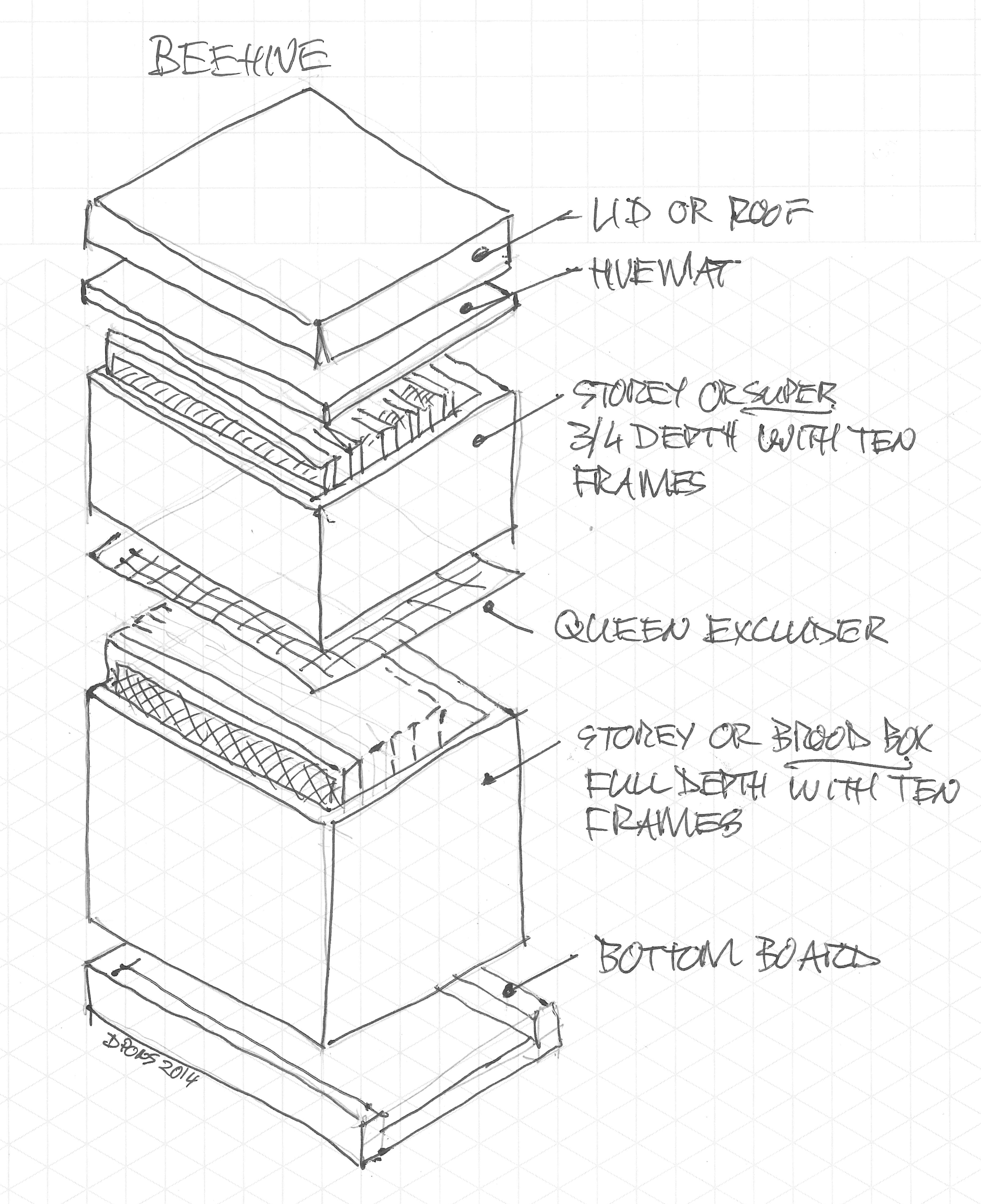
Choosing a site, the parts of a Langstroth hive, and how the first boxes go together before a package or nuc arrives.
Read the article →
What the colony needs in spring, summer, autumn and winter, and how the timing shifts with Canadian latitude.
Read the article →
How provincial associations, local clubs and the registration system work together, and what a new member can expect.
Read the article →Contact
This is an educational reference. For factual corrections or general questions, use the form below or the contact details listed. For colony disease or movement permits, contact your provincial apiarist directly.